


Why Kelp is Considered a Fish in South Africa
Yes, you read that correctly.
Under South African law, all kelp, including Ecklonia maxima – the giant kelp that grows in the cold Atlantic waters off the country’s west coast – is legally classified as a fish. Not because of a legislative oversight. Not because of any scientific confusion. But because of a deliberate decision designed to protect one of the ocean’s most valuable ecosystems.
It’s the kind of quirk that makes you look twice. And then, once you understand the reasoning, it makes complete sense.
The Law That Made Kelp a Fish
South Africa’s Marine Living Resources Act (MLRA), Act 18 of 1998, defines ‘fish’ in unusually broad terms. Under the Act, the word encompasses ‘the marine living resources of the sea and the seashore, including any aquatic plant or animal, whether piscine or not’. In short, the MLRA’s definition of fish includes marine plants – and that includes kelp.
This was a practical and forward-thinking move. By bringing seaweed under the same regulatory umbrella as fish, the South African government – through the Department of Forestry, Fisheries and the Environment (DFFE) – could apply the same conservation tools developed for managing marine fisheries to the management of kelp forests. Tools like permitting systems, defined concession areas, maximum allowable yields and harvest method controls.
The result is one of the more structured and transparent wild-harvest management systems for seaweed anywhere in the world.
How the System Works in Practice
Under the MLRA framework, South Africa’s kelp-bearing coastline is divided into defined Seaweed Rights Concession Areas (SRCAs). These zones delineate exactly where harvesting is permitted and – critically – how much can be taken. For each concession area, the DFFE sets a maximum allowable yield and specifies which harvesting method may be used.
Concession rights are issued for 15-year periods, building in long-term accountability rather than short-term opportunism. Harvesters must operate within the conditions of their permits – defined zones, specified methods and quota limits. Importantly, permitted harvesting methods are designed with the kelp plant’s recovery capacity in mind, ensuring the resource can regenerate between harvests.
None of this happens informally or without oversight. Access to South Africa’s kelp forests is a managed right, not an open resource.
Wild Harvest is Not the Problem, Unmanaged Wild Harvest is
The phrase ‘wild-harvested’ can raise eyebrows in sustainability conversations – and understandably so. Unmanaged or poorly regulated wild harvesting has caused genuine ecological harm in other parts of the world. But the MLRA framework was designed precisely to prevent that outcome.
Compare this with the regulatory picture elsewhere. In Europe, seaweed-specific legislation is still developing. The EU currently lacks a unified framework for wild seaweed harvest management, leaving individual member states to navigate their own approaches. Norway operates a well-established wild-harvest industry. It takes around 150,000 tonnes of kelp annually – regulated under its Marine Resource Act – though harvest rights are concentrated in relatively few operators. France follows a broadly similar model.
South Africa’s approach – with publicly issued concession permits, defined coastal zones, enforced yield limits and method-specific conditions – offers a level of traceability and ecological accountability that compares well internationally. The resource is actively managed, not simply extracted.
The Ecosystem Behind the Regulation
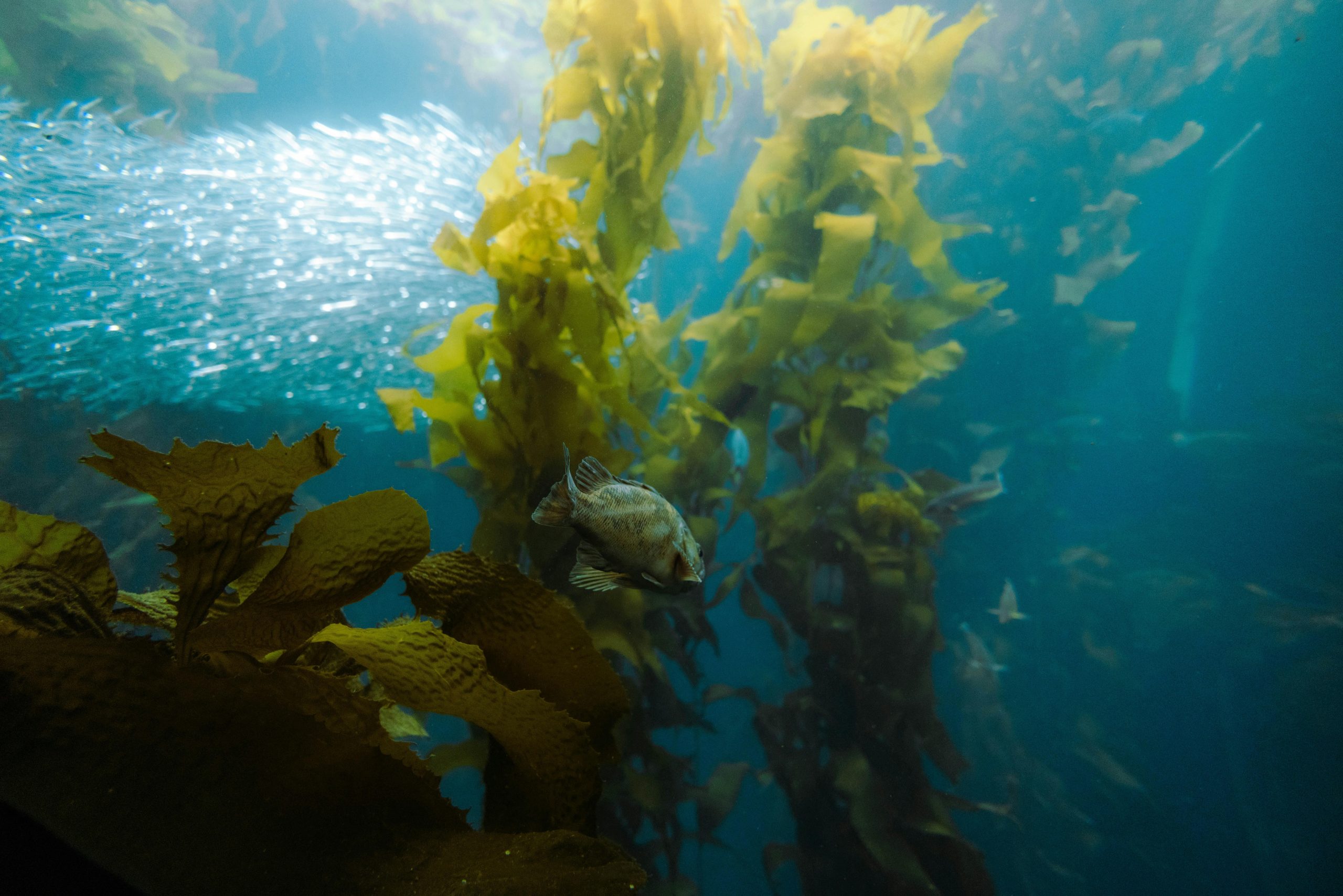
It’s worth understanding what the MLRA is protecting. South Africa’s kelp forests span roughly 1,000 kilometres of coastline along the western seaboard – a productive, biodiverse ecosystem shaped by the cold, nutrient-rich Benguela Current. These forests support commercially important fisheries, provide habitat for marine species and contribute to the ecological health of the entire nearshore zone.
Ecklonia maxima is one of the ocean’s faster-growing organisms, thriving in the turbulent, upwelling conditions of the Benguela system. That growth rate is part of what makes responsible harvesting viable – the resource can regenerate if the system is managed carefully. But it also means that excessive or careless extraction would carry consequences well beyond the kelp itself, affecting the broader biodiversity that depends on healthy kelp forests for food and habitat.
This is precisely the context the MLRA was designed to navigate: a living, dynamic resource with genuine ecological value that warrants active stewardship rather than passive assumption.
What About Cultivated Seaweed?
It’s a fair question, particularly as the global seaweed aquaculture sector continues to grow. Globally, wild harvest contributes less than 5% of total seaweed production, with the vast majority coming from cultivated species in East Asia. For high-volume commodity applications, the industry is increasingly moving towards aquaculture.
But cultivation and wild harvest serve different purposes. For biostimulant applications specifically, Ecklonia maxima is valued precisely because of the biochemical complexity shaped by its wild environment – the wave energy, fluctuating light, cold nutrient upwelling and seasonal pressure that influence what the plant produces. These conditions are not easily replicated in a cultivation setting, and the resulting biochemical profile is not the same.
Cultivated seaweed has a meaningful and growing role to play globally. But for applications where the specific character of wild Ecklonia maxima is vital, responsible wild harvest – under a well-managed regulatory system – remains the most relevant and scientifically grounded route.
A Thoughtful Framework for a Complex Resource
The classification of kelp as a ‘fish’ under South African law was never really about biology. It was about governance – about applying proven marine resource management tools to protect something worth protecting: a living, dynamic ecosystem with significant ecological and economic value.
The MLRA framework isn’t without ongoing challenges, particularly around the inclusion of small-scale fishers in the concession system. But its underlying architecture – permits, defined zones, yield limits, method controls and 15-year accountability periods – reflects a genuine commitment to managing Ecklonia maxima as the complex, living resource it is.
So the next time someone questions whether wild-harvested kelp can genuinely be sustainable, the answer starts with understanding the system that governs it.
And perhaps with the fact that in South Africa, kelp is – legally speaking – a fish.
Photo Credit: Isaac Mijangos